

 L'institut de MontpellierNotre vision est celle d’un bassin méditerranéen au sein duquel l’esprit de coopération prévaut.
 Publications du CIHEAMNos publications et outils de communication visent à faciliter les processus de prise de décision pour les acteurs politiques, économiques et agricoles de la région méditerranéenne.
 Actualités et événements
 Revue de presse (Scoop.it)
 Programmes de MasterLe CIHEAM Montpellier c’est à la fois un accompagnement personnalisé et une ouverture à l’international.
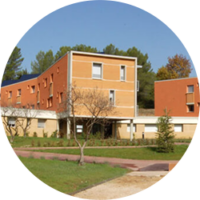 Campus & vie étudianteDepuis 1962 nous accueillons près de 95% d’étudiants internationaux.
 Portail documentaireUn Centre de documentation unique sur la Méditerranée,
investi dans le partage des connaissances.
Portail documentaireUn Centre de documentation unique sur la Méditerranée,
investi dans le partage des connaissances. Production scientifiqueLa politique des publications du CIHEAM est depuis longtemps engagée dans le mouvement du libre accès et du partage des connaissances.
 Devenir partenairesTisser des partenariats fait partie de l’ADN du CIHEAM Montpellier... Rejoignez ses projets ou ses formations, soutenez ses actions.
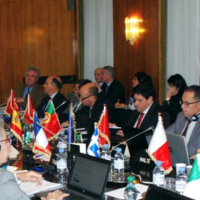 Réunions ministériellesA travers les Ministérielles , le CIHEAM contribue à la construction d'un dialogue entre les pays méditerranéens autour des questions relatives à l'agriculture et au monde rural.
Green Transition Cooperation for the Integration of Rural Innovation-based Business and Production models
| Objectives: GREENCOOP’s overall objective is to develop a set of 15 (EU) and 3 (China) LL communities to co-create mixed and digital innovations (ADIs) as 12 demos to promote social economy, enhancing farmers prosperity and rural entrepreneurs by optimizing the use of in- farm resources, reducing environmental damage, improving working conditions, and inclusion (i.e. youth, women, migrants.), fostering bioeconomy and circular economy, and increasing the number of high-quality jobs and competences. This will contribute to increase ecosystem services delivery and valorisation, improve food security, and mitigate and adapt farming systems to climate change increasing market resilience. |
Context: The challenging EU socio-economic context for the near future (land abandonment, population aging, young farmers, rural low technology access, and entrepreneurs´ migration) imposes the need for developing new Rural Communities Business models (RCBM).
These models will improve current rural business allowing to overcome the current situation and adopt innovative and cost-effective agroecological and digital solutions while increasing the environmental ecosystem services delivery, farmers’ quality of life and rural areas revitalization. The GREENCOOP overall objective is to develop a set of 15 (EU) and 2 (China) LL communities to cocreate agroecological and digital innovations (ADIs) as 12 demos to promote social economy, enhancing farmers prosperity and rural entrepreneurs by optimizing the use of in-farm resources, reducing environmental damage, improving working conditions, and inclusion (i.e. youth, women.), fostering bioeconomy and circular economy, and increasing the number of high-quality jobs and competences. ADIs will be integrated into relevant types of farming systems (farm ideotypes) selected by GREENCOOP Living Labs (LLs) and the basis for the RCBM by promoting the farmers and rural entrepreneurs’ participation in the food systems. This will contribute to increase ecosystem services delivery and valorisation, improve food security, and mitigate and adapt farming systems to climate change increasing market resilience. GREENCOOP is a 4-year project that aspires to (i) create and evaluate, through a multimodal and multidisciplinary approach, a set of 12 ADIs (ii) analyse the integration of ADIs and industries interactions in EU relevant among rural business by developing RCBM and (iii) benchmark the current business models with the RCBM by assessing their economic, environment and social impacts and (iv) optimize the RCBM to enhance farming systems sustainability , productivity, rural/urban connectivity, and resilience against climate and market.
Results expected
- RIBC-Net: LLs community build in GREENCOOP and promoting collaboration actions beyond its lifespan to support sustainability and enlargement
- Harmonized guidelines for data collection and ADIs protocols for promotion of implementation of GREENCOOP strategies (ADIs), monitoring and verification efforts
- Business Database (BUS-DB)
- Rural Community Business Models (RCBM) Sustainability assessment: to analyse effects and long-term applicability and affordability of the ADIs
- Policy recommandations
- Multi-criteria Decision tool (BUSDST): decision support tool that can support land managers at the EU level in their optimal management planning in a way that is in line with EU related policy targets (ES, biodiversity, bioeconomy, climate mitigation and adaptation) while maintaining economic viability
- Knowledge Platform (BUS-PT): tailor-made platform including all tools developed and information from the implementation of GREENCOOP that will facilitate searching information through the website. Main components included are: (i) BUS KC (ii) MOOC; (iii) BUS-DST Tool; and (iv) RIBCM-Net
- Multi-lingual Open Course: MOOC
MORE INFORMATION
Contacts
Coordination
- Project Manager: Georgios Kleftodimos - Contact: kleftodimos@iamm.fr
- Project assistant: Agathe Dupont - Contact: dupont@iamm.fr
CIHEAM-IAMM team
- Georgios Kleftodimos, Hatem Belhouchette, Amélie Bourceret
Coordinator: University of Santiago de Compostela
Participants:
- Fundacion empresa universidad gallega
- Carbone fertile centre national d’agroécologie
- Solutopus - recursos edesenvolvimento lda
- Helsingin yliopisto
- Panepistimio thessalias
- Consiglio per la ricerca in agricoltura e l'analisi
- Wageningen university
- Leibniz-zentrum fuer agrarlandschaftsforschunde
- Agroecology innovation advisory sl
- Geoponiko panepistimion athinon
- Region de murcia
- E-science european infrastructure for biodiversity
- Discovery center nonprofit korlatolt felelosseg
- University of east anglia
- Neiker-instituto vasco de investigacion y desarro
- Universitat de valencia
- Asociación de criadores de la raza porcina celta
- Universidade de coimbra
- Agricultural information institute of chinese academy of agricultural sciences
Sources of Funding: HORIZON-CL6-2024-COMMUNITIES-02-02
European Commission