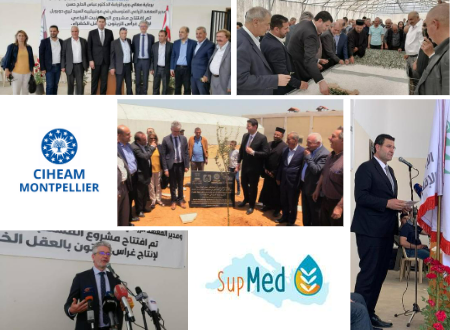
Inauguration of the SupMed Project Nursery under the High Patronage of His Excellency Dr. Abbas Hajj Hassan, Minister of Agriculture of Lebanon, and Mr. Thierry Dupeuble, Director of CIHEAM Montpellier.
Minister Hajj Hassan emphasized the importance of the SupMed Project for Lebanese agriculture, as it promotes sustainable agricultural production, which contributes to reducing Lebanon’s food dependency.
Mr. Dupeuble stressed the importance of the continued collaboration between CIHEAM Montpellier and agricultural partners in the Baalbeck-Hermel region. After supporting the establishment of an olive oil mill, they are now supporting the realization of this nursery. He assured the Lebanese stakeholders of CIHEAM Montpellier’s commitment to stand by their side in the future as well.
The SupMed Project Nursery, primarily dedicated to olive tree seedling production, will enable the Farmers Support Center (FSC) in Hermel to develop and structure an organic olive sector by providing local variety seedlings. The production is focused on the green cutting technique.
More than a hundred people attended this event, including representatives from the majority of local cooperatives and leading farmers involved in the project. Numerous institutional representatives were also present, along with local and national media.
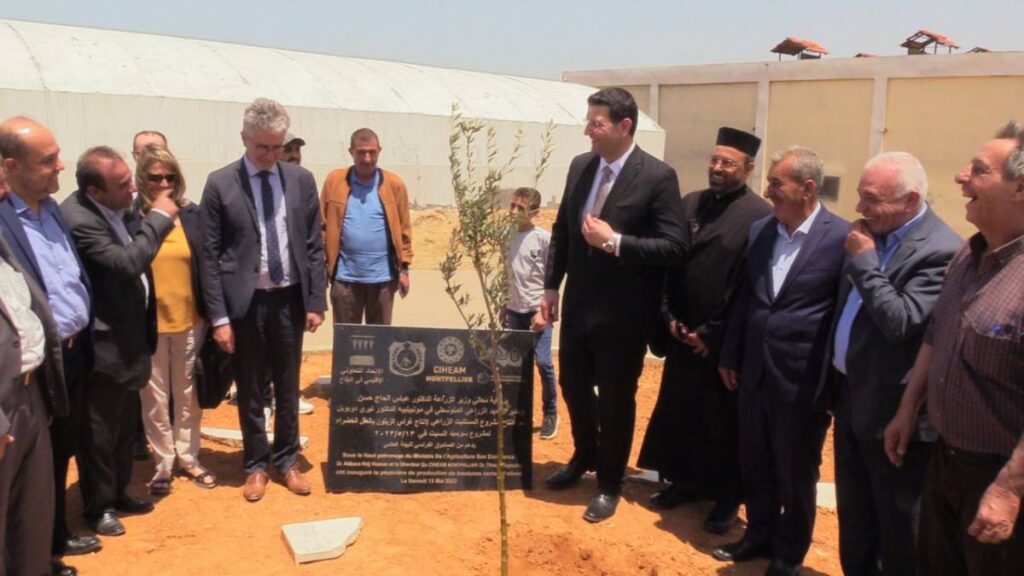
His Excellency Dr. Abbas Hajj Hassan, Minister of Agriculture of Lebanon, and Mr. Thierry Dupeuble, Director of CIHEAM Montpellier, concluded the ceremony by planting an olive tree in front of the commemorative plaque.
NATAE (Fostering Agro-ecological transition in North Africa through multi-actors design, evaluation and networking) is a newly awarded project under the Horizon Europe programme.
The Mediterranean Agronomic Institute of Montpellier (CIHEAM Montpellier), one of the four institutes of the International Centre for Advanced Mediterranean Agronomic Studies (CIHEAM), is an intergovernmental organization whose mission is the development of higher education and lifelong learning, research and cooperation in the Mediterranean area. Within the scope of the NATAE project, CIHEAM Montpellier offers a position of Public Policy Expert.
Job specifications
Starting date: ideally July 3, 2023;
Contract duration: fixed term contract of 10 months (40 weeks);
Location: Mediterranean Agronomic Institute of Montpellier
Closing date of the call for applications: June 11, 2023
Context
NATAE (Fostering Agro-ecological transition in North Africa through multi-actors design, evaluation and networking) is a newly awarded project under the Horizon Europe programme. Based on a multi-actor and interdisciplinary approach, this four-year project will generate new insights for assessing practices that are inspired by agro-ecology in a multidimensional way and at multiple scales (from production systems to territory and value chains). The aims are to identify, evaluate and eventually promote the best observed and experimented combinations of practices inspired by agro-ecology in North Africa (i), and to set up a Mediterranean agro-ecological network for knowledge exchanges and advocacy at regional level (ii). The approach is based on Multi-Actor Labs (MALs), as territories that are anchored in specific agro-ecosystems of North Africa. Production of scientific data and analyses in the field of agronomics, sociology and economics will inform on the potential for agro-ecological transition in the region. NATAE will support the co-creation and co-learning with multiple actors in MALs as well as concrete policies by informing largely with the opportunities provided by an agro-ecological transition perspective. It will also organize the capitalization and transfer of generated knowledge to education and extension. NATAE will further develop an Atlas platform on the performance of practices inspired by agro-ecology with regards to the farms, the landscape and the food systems.
Analysis of the dynamics of socio-economic and environmental transition that regulate the relationships between agricultural production, local food and the ecosystem through the mobilization of indicators, tools and multidimensional and spatial approaches to build more sustainable and resilient territorial food systems in Occitania.
PROFILE REQUIRED: Background required: Master 2 in economics (agricultural, rural, development) or engineering degree specialized in economics (bac +5) Expected prerequisites: – Strong background in agricultural, agri-food, rural, territorial, or development economics – Scientific curiosity, autonomy, taste for data work, ability to work in a team – Appetence for fieldwork (participatory practices) and for data processing and analysis in R – Excellent writing skills. French: Excellent / Very good English: Very good
Closing date for applications: June 11, 2023 Selection date for interviews: June 15 and 16, 2023 Starting date: October 1, 2023
Thesis direction and supervision : – Tristan Berchoux (Supervisor, Scientific Coordinator of the Horizon Europe GRANULAR project), Lecturer-Researcher CIHEAM-IAMM, UMR TETIS (Territories, environment, remote sensing and spatial information) – Paolo Prosperi (PhD supervisor, HDR in economics), Lecturer-Researcher CIHEAM-IAMM, UMR MoISA (Montpellier Interdisciplinary Center on Sustainable Agri-food Systems)
NATAE Fostering agroecology transition in North Africa through multi-actor, evaluation, and networking: Expert in Public Policy – focus on North Africa
Within the framework of its NATAE project, the CIHEAM-IAMM launches a call for tenders for the realisation of an expertise in the field of public policy analysis in North Africa, on the basis of the following terms of reference.
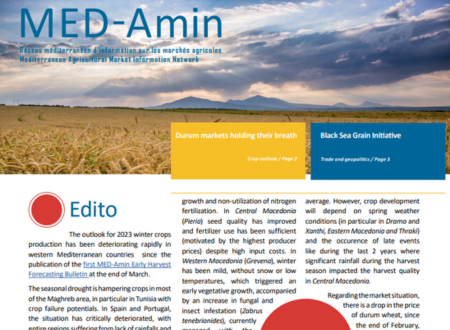
The outlook for 2023 winter crops production has been deteriorating rapidly in western Mediterranean countries since the publication of the first MED-Amin Early Harvest Forecasting Bulletin at the end of March.
The seasonal drought is hampering crops in most of the Maghreb area, in particular in Tunisia with crop failure potentials. In Spain and Portugal, the situation has critically deteriorated, with entire regions suffering from lack of rainfalls and soil moisture (with temperatures significantly warmer than seasonal average).
All this will be closely monitored by JRC MARS and MED-Amin and updated in the May Bulletin. In this issue, you will find also the reports of the latest JRC MARS Bulletins on Europe and Türkiye.
In Greece, winter crops are developing fairly well so far. The sowing of winter cereals started 20 days before the average […]
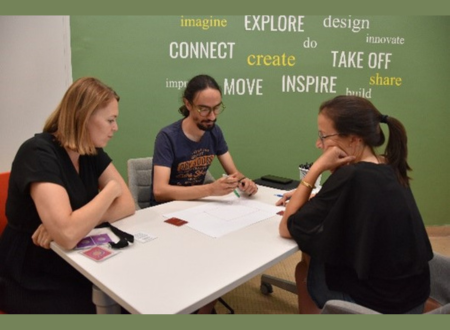
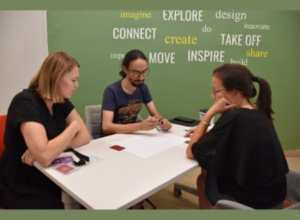
After the co-design of the first workshop entitled “Mobilising your research results in teaching-Invitation to active pedagogies” in June 2022, the CSIP and the CIHEAM Montpellier are collaborating once again to offer you an IDEON workshop, on Thursday 25 May 2023 from 1.30 to 4.30 pm at the Institut de Botanique – Université de Montpellier.
Animated by:
Brigitte Lundin, Head of the Pedagogical Innovation Support Centre,
Céline Avenel, Pedagogical Coordinator of the Centre de Soutien aux Innovations Pédagogiques.
Myriam Kessari, Teacher-researcher, CIHEAM-IAMM
We have all experienced long, drawn-out oral presentations at conferences! The aim of this workshop is to provide techniques to help you boost your scientific communication.
For whom?
teachers-researchers,
researchers,
doctoral students.
Why?
To develop your scientific communication skills,
to discover techniques to identify the “essence” of your message,
to create an effective, impactful, and interactive pitch.
Finally, the workshop will aim to discover methods you can use in writing (a paper or an article) and in the oral presentation itself, but also in your pedagogical thinking and thus transfer them into teaching situations with your students.
How do you do it?
Acquire a state of mind rather than techniques.
The workshop is based on interactivity, interdisciplinarity, and learning by doing.
In short, discover by doing and by creating together, whatever your field of research may be.
Number of participants: 20 maximum. If there are less than 9 participants, the workshop will be cancelled.
The workshops are free of charge, but registration is mandatory.
We use cookies on our website to give you the most relevant experience by remembering your preferences and repeat visits. By clicking “Accept All”, you consent to the use of ALL the cookies. However, you may visit "Cookie Settings" to provide a controlled consent.
This website uses cookies to improve your experience while you navigate through the website. Out of these, the cookies that are categorized as necessary are stored on your browser as they are essential for the working of basic functionalities of the website. We also use third-party cookies that help us analyze and understand how you use this website. These cookies will be stored in your browser only with your consent. You also have the option to opt-out of these cookies. But opting out of some of these cookies may affect your browsing experience.
Necessary cookies are absolutely essential for the website to function properly. These cookies ensure basic functionalities and security features of the website, anonymously.
Cookie
Duration
Description
cookielawinfo-checkbox-analytics
11 months
This cookie is set by GDPR Cookie Consent plugin. The cookie is used to store the user consent for the cookies in the category "Analytics".
cookielawinfo-checkbox-functional
11 months
The cookie is set by GDPR cookie consent to record the user consent for the cookies in the category "Functional".
cookielawinfo-checkbox-necessary
11 months
This cookie is set by GDPR Cookie Consent plugin. The cookies is used to store the user consent for the cookies in the category "Necessary".
cookielawinfo-checkbox-others
11 months
This cookie is set by GDPR Cookie Consent plugin. The cookie is used to store the user consent for the cookies in the category "Other.
cookielawinfo-checkbox-performance
11 months
This cookie is set by GDPR Cookie Consent plugin. The cookie is used to store the user consent for the cookies in the category "Performance".
viewed_cookie_policy
11 months
The cookie is set by the GDPR Cookie Consent plugin and is used to store whether or not user has consented to the use of cookies. It does not store any personal data.
Functional cookies help to perform certain functionalities like sharing the content of the website on social media platforms, collect feedbacks, and other third-party features.
Performance cookies are used to understand and analyze the key performance indexes of the website which helps in delivering a better user experience for the visitors.
Analytical cookies are used to understand how visitors interact with the website. These cookies help provide information on metrics the number of visitors, bounce rate, traffic source, etc.
Advertisement cookies are used to provide visitors with relevant ads and marketing campaigns. These cookies track visitors across websites and collect information to provide customized ads.

 CIHEAM MontpellierOur vision is that of a Mediterranean basin characterised by a spirit of cooperation.
 CIHEAM publicationsOur publications and communication tools aim to facilitate decision-making processes for political, economic and agricultural actors in the Mediterranean region
 News and events
 Press review (Scoop.it)
 Master programmesThe CIHEAM Montpellier stands for both personalised accompaniment and international openness.
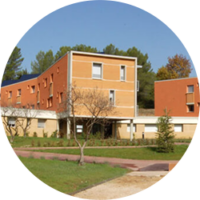 Campus & student lifeSince 1962, almost 95% of our foreign students have been granted accommodation on site.
 Doctoral platformShaping the scientists of tomorrow through research training… A natural commitment of the CIHEAM Montpellier
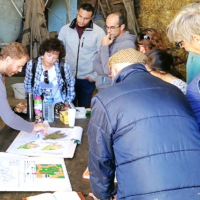 ProjectsOur research and cooperation projects are tools for inclusive development, they take into account the populations and rural and coastal territories of the Mediterranean.
 Mediterranean online catalogueA unique Documentation Center on the Mediterranean,
invested in sharing knowledge.
Mediterranean online catalogueA unique Documentation Center on the Mediterranean,
invested in sharing knowledge. Scientific productionThe scientific production of the CIHEAM Montpellier is the fruit of collaborations by our lecturer-researchers, associated experts, students and research partners.
 Becoming partnersCreating partnerships is part of the genetic make-up of the CIHEAM Montpellier... Join one of its projects or study programmes, support its actions.
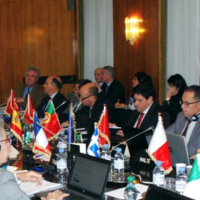 Ministerial meetingsThrough the Ministerial, CIHEAM contributes to the construction of a dialogue between the Mediterranean countries around questions relating to agriculture and the rural world.
 Al Mayadeen Lebanon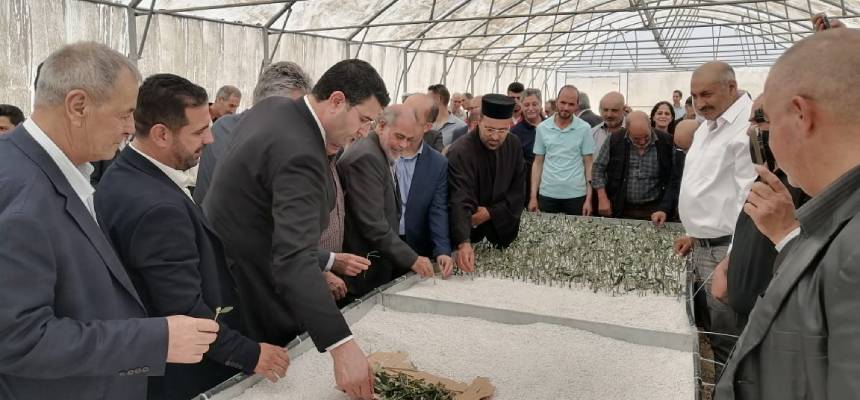
 PROFILE REQUIRED: