Bottom-up mathematical programming for sustainable food supply in the 21st Century
Project Summary
Building up 5 self-study packages (basic courses) and teaching packages (advanced modules) on modelling techniques based on mathematical programming for economic analysis in agriculture and environment aiming at maintaining sustainable agriculture and improving food supply in the 21st Century.
Objectives
- Capitalize the teaching experience related to mathematical programming for sustainable agriculture and improved food supply;
- Reinforce the network of modellers in Europe and in the Mediterranean higher education institutions working on integrated mathematical programming models of policy analysis;
- Develop e-learning materials for modelling courses.
Activities
- Design and develop self-study materials for advanced modelling courses available on a participative e-learning platform;
- Organise dissemination workshops and international courses on mathematical programming with Mediterranean scientists and young researchers.
Results and impact
-
Improvement of the current courses contents;
-
Improvement of MSc students’ ability to use mathematical programming techniques and especially to develop a relevant model in their Master thesis;
-
Building up of PhD and post-doc self–learning material allowing them to develop a simulation model appropriated to their research needs;
-
Educational support available on line for teachers and researchers in Agricultural Higher education institutions in Europe and in Southern Mediterranean countries.
Coordinator
Institut National de la Recherche Agronomique (INRA/UMR Moisa) – France
More information
Source of funding : Agropolis Fondation
Contacts:
- Florence JACQUET (INRA / UMR Moisa), Responsable du projet – florence.jacquet@inra.fr
- Hatem BELHOUCHETTE (CIHEAM-IAMM / UMR System), coordonnateur – belhouchette@iamm.fr
- Sophie THOYER (SUPAGRO/ UMR Lameta) – sophie.thoyer@supagro.fr
- Sophie DROGUÉ (SUPAGRO-INRA / UMR Moisa) – sophie.drogue@supagro.inra.fr
Total budget: 147 800 €
Partners:
- CIHEAM – Institut Agronomique Méditerranéen de Montpellier (CIHEAM-IAMM) – France
- INRA Agro-Campus Ouest – France
- INRA/Montpellier SupAgro – France
- Institut International pour l’analyse des systèmes appliqués (IIASA) – Autriche
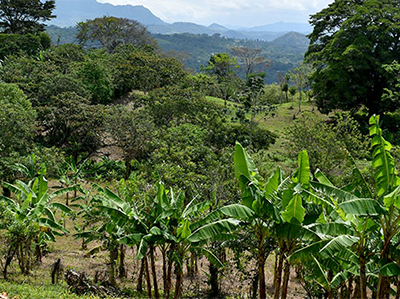
Forests and Ecological intensification of Agricultural Systems
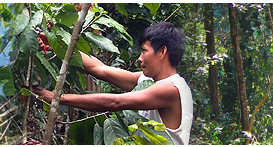 Comment réduire l’empreinte de l’agriculture sur les forêts naturelles ? L’agro-écologie peut-elle s’appliquer aux systèmes de production agricole en milieu forestier et améliorer leurs performances et leur durabilité ? Le projet FORECAST va développer une plateforme en ligne sur l’agro-écologie en milieu forestier. Les utilisateurs y trouveront des ressources pédagogiques, des outils d’analyse et de modélisation, et une base de données d’études de cas de systèmes écologiques et sociaux (SES) forestiers permettant des analyses comparatives de l’impact et des performances des pratiques agricoles y étant mises en œuvre.
>> Site web
Objectifs
Une analyse comparative globale des systèmes de production agricoles pratiqués en milieu forestier permettra de repérer les pratiques agricoles les plus durables et de développer des propositions techniques réduisant l’impact écologique de l’agriculture tout en améliorant ses performances techniques, économiques et sociales. Le projet FORECAST vise à produire des outils d’analyse et des ressources pédagogiques pour mieux comprendre les systèmes agricoles en milieu forestier, les analyser et les comparer.
Activités
- Production de ressources pédagogiques numériques ;
- Production d’outils d’analyse pluri-disciplinaire et de modélisation des systèmes écologiques et sociaux (SES ) forestiers (analyse des performances techniques, économiques, sociales, écologiques), et d’une base de données en ligne ;
- Test et validation des ressources pédagogiques et outils produits par des études de cas dans 3 pays (Cameroun, Madagascar, Nicaragua).
Résultats et impacts du projet
Une plateforme en ligne sur l’agro-écologie en milieu forestier mettant à disposition gratuitement :
- Des nouvelles ressources pédagogiques
- Un outil d’analyse et de modélisation pour évaluer les performances techniques, économiques, sociales et écologiques des pratiques agricoles et des SES forestiers.
- Une base de données de cas d’étude de SES forestiers.
Coordinateur
Centre de Coopération Internationale en Recherche Agronomique pour le Développement (CIRAD, UR Forêts et Sociétés, UMR Innovation, UMR System) – France
En savoir plus
Source de financement : Fondation Agropolis/ programme «Investissements d’avenir»
Contacts :
- Laurène FEINTRENIE, Chercheur CIRAD, laurene.feintrenie@cirad.fr
- Eric PENOT, Chercheur CIRAD, eric.penot@cirad.fr
- Philippe Le Grusse, Enseignant-Chercheur CIHEAM-IAMM, legrusse@iamm.fr
Budget total : 200 000 €
Partenaires :
- Montpellier Sup Agro (MSA, UMR Innovation) – France
- Université Liège-Gembloux (groupe Gestion des ressources forestières) – Belgique
- Université de Wageningen University (Farming systems ecology group) – Pays-Bas
- École Régionale post-universitaire d’Aménagement et de gestion Intégrée des Forêts et Territoires tropicaux (ERAIFT) – République du Congo
- Centro Agronómico Tropical de Investigación y Enseñanza (CATIE, programmes IDEA et PAAS) – Costa Rica
- Ecole Supérieure des Sciences Agronomiques d’Antanarivo (ESSA) – Madagascar
- Centre Technique Horticole de Tamatave (CTHT, équipe Hortsys) – Madagascar
Quality in Mediterranean Agronomy Higher Education
 This Tempus IV project – targetting both students and professionals – aims at implementing or developing trainings in quality management and metrology. The project produces online courses and develops quality management processes in the fields of education and research. As a result, it aims at bringing universities closer to professionals.
>> Website
Objectives
- Strengthen the capacities of higher education institutions by improving their training curriculum in agriculture thanks to the integration of a quality management and a metrology approach.
- Enhance networking between agronomic higher education and research institutions in the Southern Mediterranean partner countries and the EU members States.
Activities
The project implements 3 types of activities to meet the needs of the professional agronomic world:
- ACADEMIC Training: provide initial training in quality management and metrology to students in agronomy; develop modules adapted to the context of the various carrier paths; develop e-learning resources to target a wider public while controlling costs.
- PROFESSIONAL: increase awareness among the agricultural sector managers regarding challenges of quality and metrology underlying competitiveness; offer an adapted training (action learning) to the concerned professionals; prefigure a pool of expertise and share experience.
- DIRECT APPLICATION within the training and research institutions: take into account the specific needs of quality and metrology in the institutions themselves, firstly for the organization of research and the technology transfer, and secondly for the design and certification of the courses.
Results and impacts
ACADEMIC WORLD: creation of 9 online courses (40 ECTS).
- 5 initial training modules (master-level): Metrology/Quality; Metrology and quality in Food safety; Food processing; Non-food products; Water resources.
- 4 vocational training modules: awareness-raising in Metrology/Quality; Quality standards; Self-assessment and audits; intra- and inter-organism action-training A specialized master’s degree in ‘Quality and Metrology’ was created at Cadi Ayyad University (Morocco).
PROFESSIONAL WORLD: workshops have provided training for over 1,000 people, including professionals, on the following themes: Quality, health and food safety; Uncertainty and quality control; Statistical process control; Intra- and inter-organism comparisons; Technical product standards; Quality management standards.
DIRECT APPLICATION (transfer): Two pilot sites were supported during the project to develop quality or metrology procedures within the organization, either to implement a quality-certification process or to accredit laboratories.
Coordinator
CNAM (porteur du projet), CIRAD (porteur délégué) – France
More information
Source of funding: UE Tempus IV
Programme and contacts:
- Marc Himbert (CNAM), chef de projet
- Luc Martin (CIRAD), chef de projet délégué
- Pierre Arragon (IAMM-Atelier Multimédia), responsable du WP4 «Ingénierie et production en e-learning»
Total budget: 1 280 000 €
Partners:
- Univ. M’Hamed Bougara de Boumerdès – Algeria
- Univ. Mohamed Khider de Biskra – Algeria
- ENSAA (Ecole nationale supérieure agronomie, El Harrach) – Algeria
- Univ. de Mons – Belgique
- AUF (Agence française de la francophonie – Dir. Régionale Europe de l’Ouest, Bruxelles – Belgique
- CIRAD (porteur délégué) (Centre de coopération internationale en recherche agronomique pour le développement, Montpellier) – France
- CAFMET (Comité africain de métrologie, Paris) – France
- CIHEAM-IAMM (Institut agronomique méditerranéen de Montpellier) – France
- Montpellier SupAgro – France
- CIEP (Centre international d’études pédagogiques, Paris) – France
- QUARES (Qualité en recherche et en enseignement supérieur, Montpellier) – France
- Univ. de Catane – Italie
- Univ. libanaise (Beyrouth) – Liban
- Univ. du St Esprit de Kaslik (Jounieh) – Liban
- Univ. Cadi Ayyad (Marrakech) – Maroc
- IAV Hassan II (Institut agronomique vétérinaire, Rabat) – Maroc
- ENA (Ecole nationale d’agriculture, Meknès) – Maroc
- ENFI (Ecole nationale forestière d’ingénieurs, Rabat) – Maroc
- Conseil régional de l’Oriental (Oujda) – Maroc
- INAT (Institut national agronomique de Tnuisie, Tunis) – Tunisie
- ISA Chott-Mariem (Institut supérieur agronomique, Chott Mariem) – Tunisie
- Pôle de compétitivité de Bizerte – Tunisie
Creation of jobs in South Tunisia to support agriculture and handicraft: solidarity economy and professionalization
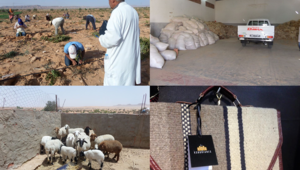 Coordinated by the CIHEAM-IAMM, the « Emploi Sud Tunisie » Project aims at enhancing the creation of jobs in the fields of agriculture and handicraft in the Medenine governorate. It fosters the integration of young people, either graduated or not, within the regional economy and responds to the farmers and cooperatives needs in terms of skills and service gaps.
Objectives
The project is focused on agriculture and handicraft, two key sectors in the Medenine governorate, and aims at:
- Promoting the setting up of young farmers thanks to a close and targeted technical assistance which supports them in their access to bank loans
- Reinforce the professional qualifications of the agricultural workforce through trainings offering all necessary technical skills
- Developing private and collective services for farmers and for the other stakeholders in the agricultural and rural development sectors
- Developing commercial flows for handicraft products
Activities
- Support the creation of agricultural economic activities
- Assess and closely monitor the activities developed by the beneficiaries
- Organize training sessions to improve the skills of the local actors
- Enhance the diversification of market opportunities for handicraft products
Results
- 50 young people settled up as farmers
- 9 agricultural service enterprises created
- 150 farm workers trained in agricultural technics
- 4 commercial flows developed for craftswomen in the Medenine area
Coordinator
CIHEAM-IAM Montpellier – France
En savoir plus
Source de financement : EU Delegation in Tunisia ; Conseil Départemental de l’Hérault
Programme et contacts :
- Jean-Paul PELLISSIER (CIHEAM-IAMM) – Project leader – pellissier@iamm.fr
- Zied AHMED (CIHEAM-IAMM) – Project officer – ahmed@iamm.fr
Budget total : 491 000,00 €
Partners :
- La coopérative « Al Rouki » de Médenine (SMSA Al Rouki) – Tunisie
- La coopérative « Al Rouki » de Médenine (SMSA Al Rouki) – Tunisie
- La coopérative « Al Intilaka » de Zarzis (SMSA Al Intilaka) – Tunisie
-


 CIHEAM MontpellierOur vision is that of a Mediterranean basin characterised by a spirit of cooperation.
 CIHEAM publicationsOur publications and communication tools aim to facilitate decision-making processes for political, economic and agricultural actors in the Mediterranean region
 News and events
 Press review (Scoop.it)
 Master programmesThe CIHEAM Montpellier stands for both personalised accompaniment and international openness.
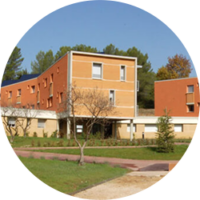 Campus & student lifeSince 1962, almost 95% of our foreign students have been granted accommodation on site.
 Doctoral platformShaping the scientists of tomorrow through research training… A natural commitment of the CIHEAM Montpellier
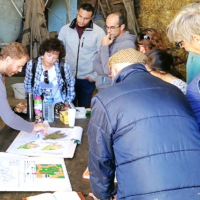 ProjectsOur research and cooperation projects are tools for inclusive development, they take into account the populations and rural and coastal territories of the Mediterranean.
 Mediterranean online catalogueA unique Documentation Center on the Mediterranean,
invested in sharing knowledge.
Mediterranean online catalogueA unique Documentation Center on the Mediterranean,
invested in sharing knowledge. Scientific productionThe scientific production of the CIHEAM Montpellier is the fruit of collaborations by our lecturer-researchers, associated experts, students and research partners.
 Becoming partnersCreating partnerships is part of the genetic make-up of the CIHEAM Montpellier... Join one of its projects or study programmes, support its actions.
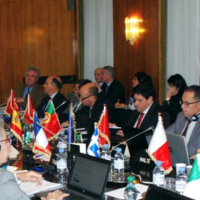 Ministerial meetingsThrough the Ministerial, CIHEAM contributes to the construction of a dialogue between the Mediterranean countries around questions relating to agriculture and the rural world.