Quality in Higher Education about Renewable Energies in North and West Africa
This project was built as a continuation of the QESAMED Tempus project (2013-2016). The number of Partners has been enlarged from 12 to 24, the geographical influence has been extended to new areas (Europe, North and West Africa) and a new major issue has been included: renewable energies applied to agriculture, agronomy and agri-food chains.
Sustainable access to energy is an absolute necessity in Africa to cope, among others, with climate changes. Renewable energies represent a big challenge and the rise of new environmental technologies opens innovative perspectives.
AFREQEN is an Erasmus+ “Capacity Building in Higher Education” project, which brings together 24 French-speaking partners. The project aims at enhancing the development of skills by co-developing higher education and vocational training programs focussed on the key dimensions of metrology and quality management applied to the field of renewable energies.
The CIHEAM-IAMM is in charge of the WP5: support the partners in the development of e-learning modules. It fosters production through the pooling of professional skills (video production, pedagogical engineering, sound recording, video shooting…) and the training of teams who could perpetuate the production of e-learning courses.
>> Website
Objectives
Two objectives are targeted by AFREQEN:
- Develop e-learning modules: initial (masters) and vocational training about metrology and quality management applied to the fields of renewable energies and energy efficiency.
- Support the full implementation of skills in quality management and metrology within the partner institutions, not only regarding their education programmes but also the transfer of results of research.
Activities
- Develop initial training modules in quality management and metrology applied to renewable energies;
- Build e-learning resources to target a larger public, at controlled costs (Moocs).
- Organize workshops to mobilize the managers of the agricultural and agro-food sectors and increase their awareness about quality management and metrology issues in respect of competitiveness;
- Implement training-action sessions;
- Build a network of expertise and experience sharing;
- Support the transfer of technology and the quality certification of trainings.
Results and impacts
- Production and online availability of e-learning resources
- Institutions with certified quality management systems
- Research labs with strengthened skills and equipment
- Trained professionals through training-action sessions
Coordinator
Conservatoire national des arts et métiers (CNAM) – France
More information
Source of funding : UE – Erasmus+ Key action n° 2: Cooperation for innovation and the exchange of good practices – Capacity-building in the field of higher education; Call for proposals EAC/A04/2015
Contacts:
- Marc HIMBERT (CNAM), France (marc.himbert@lecnam.net)
- Luc MARTIN (CIRAD), France (luc.martin@cirad.fr)
- Pierre ARRAGON (CIHEAM-IAMM), France (fad@iamm.fr)
Total budget: 1 000 000 €
Partners :
- Ecole nationale supérieure agronomie (ENSA) ; Université Mohamed Khider de Biskra (UMBK) – Algeria
- Agence française de la francophonie (AUF) – Dir. Régionale Europe de l’Ouest – France
- Université catholique de Louvain (UCL) – Belgique
- Institut international d’ingénierie de l’eau et de l’environnement (2iE)
- Université Ouagadougou (UOUAG) – Burkina Faso
- Institut national polytechnique Houphouët-Boigny (INPHB)
- Université Félix Houphouët-Boigny (UFHB) – CI
- Universidad de La Laguna (ULL) – Espagne
- Comité africain de métrologie (CAFMET) – France
- Centre international d’études pédagogiques (CIEP) – France
- CIHEAM – Institut Agronomique Méditerranéen de Montpellier (CIHEAM-IAMM) – France
- Centre de coopération internationale en recherche agronomique pour le développement (CIRAD) – France
- Qualité en recherche et en enseignement supérieur (QuaRES) – France
Université de Perpignan Via Domitia (UPVD) – France
- Conseil régional de l’oriental (CRO) – Maroc
- Institut agronomique vétérinaire (IAV Hassan II) – Maroc
- Université Cadi Ayyad (UCAM) – Maroc
- ENDA -Energie environnement développement ; Université Cheikh
- Anta Diop (UCAD) – Sénégal
- Université Gaston Berger (UGB) – Sénégal
- Université Carthage (UCAR) – Tunisie
- Université de Monastir (UMON) – Tunisie
Mediterranean Culinary Heritage Experiences: how to create sustainable tourist destinations?
MEDFEST is tackling the challenge of diversifying traditional ‘sun & sea’ tourism destinations, with new and sustainable products based on the rich and renowned culinary heritage of the Mediterranean.
This approach is unique because Mediterranean culinary heritage initiatives are generally unconnected and to this day there have been only few common approaches developed to integrate this culinary heritage into a sustainable tourism offer. The methodology in MEDFEST is based on participatory action planning, where three main types of stakeholders (producers, tourism organisations, policy makers) are involved and take responsibility for the project’s actions from the beginning till the end to ensure the sustainability of the results.
Objectives
MEDFEST’s general objective is to create or improve existing strategies related to sustainable tourism development within the traditional Mediterranean small-scale culinary sector.
The project aims at creating tools and instruments for designing new sustainable and alternative culinary experiences, which will be offered to visitors.
Activities
- Create tools for enhancing sustainable tourism destinations by using culinary heritage as a resource;
- Foster the creation of eight new sustainable tourism destinations in the Mediterranean area;
- Develop a common transnational strategy on managing and planning culinary tourism in the Mediterranean area.
Results and impacts
- Increase the tourism sustainability and quality of life in the Mediterranean area;
- Diversify the tourism sector in terms of products and seasonality;
- Extend tourism development to the rural coastal hinterland;
- Safeguard the Mediterranean culinary heritage for future generations.
More information
Source of funding: Programme InterReg Med/ fonds UE FEDER
Contacts:
- David BOLE, coordinateur, ZRC-SAZU, Slovenia, david.bole@zrc-sazu.si
- Fatima EL HADAD-GAUTHIER, Teacher-researcher, CIHEAM-IAMM, France, elhadad@iamm.fr
Total budget: 2 218 473 €
Partners:
- Research Centre of the Slovenian Academy of Sciences and Art (ZRC SAZU) – Slovénie
- Associazione Svilupo Rurale (ASR) – Italie
- Ecole d’Ingénieur de Purpan (EI PURPAN) – France
- Université de Barcelone (UB) – Espagne
- Associação In Loco – Portugal
- Agence pour le développement rural de l’Istria Ltd. (AZRRI) – Croatie
- Technical Institute of Heraklion Chamber (TIHC) – Grèce
- Τroodos Network Thematic Centers (DITHEKET) – Chypre
- CIHEAM-IAMM is part of the 11 additional associated partners – France
High Nature Value farming: Learning, Innovation and Knowledge
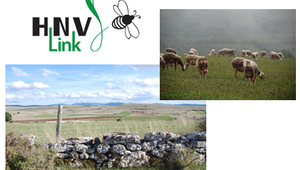
High nature value (HNV) farmland defines areas in Europe where agricultural activities support and are associated with exceptionally high biodiversity. These areas are an important component of European agriculture not only for their natural values but also for cultural heritage, quality products and rural employment. Such farming is practised most frequently in areas where natural constraints prevent intensive production. They mainly, but not exclusively, involve low-intensity livestock farming.
The HNV Link project network focuses on innovations that increase the socio-economic viability of HNV farming while maintaining natural values of HNV farmland, including ecosystem services provided to the society. The project links the partners into a peer-learning process and harnesses their innovation expertise for use in other HNV farmland regions.
>> Website
Objectives
HHigh Nature Value Farming: Learning, Innovation and Knowledge (HNV-Link) is a 13-partner network dedicated to developing and sharing innovations that support HNV farming systems and communities by simultaneously improving their socio-economic viability and environmental efficiency.
Activities
The project is implemented in 10 so called “learning areas”, where HNV farming systems are prevalent and where appropriate innovations have been made to sustainably maintain HNV farmland. Innovations are not only technical and commercial but also social, institutional and regulatory.
The following activities are developed:
- Assess the current situation of HNV farming systems (evolution dynamics, challenges);
- Collect and evaluate innovation examples from the grassroots and innovation gaps;
- Engage key actors across a shared HNV farming vision;
- Organise an “Innovation Fair” to foster peer learning among partners
- Arrange cross visits of practitioners to learn from the field
- Disseminate the innovations and lessons learnt to engage farmers groups, advisors, researchers and other actors beyond the 10 learning areas.
Results and impacts
- Edition of an Atlas of innovations feasible within HNV farming areas
- Peer learning and innovation transfers between partners
- Strengthened network of HNV farming actors
- Scientific and policy papers on HNV farming
- Package of educational material exposing educators and students alike to HNV concepts, challenges and opportunities.
Coordinator
CIHEAM – Institut Agronomique Méditerranéen de Montpellier (CIHEAM-IAMM) – France
More information
Source of funding : European Commission, H2020 programme
Contacts :
- François LERIN – CIHEAM-IAMM, France, coordonnateur, contact@iamm.fr
- Claire BERNARD-MONGIN – CIHEAM-IAMM, chargée de projet, contact@iamm.fr
- Maïté PUIG DE MORALES – CIHEAM-IAMM, gestion financière, puigdemorales@iamm.fr
- Virginie AVIGNON – CIHEAM-IAMM, assistante, avignon@iamm.fr
Total budget: 2 200 000 €
Partners :
- European Forum on Nature Conservation and Pastoralism (EFNCP) – R.-U.
- Université d’Evora, Instituto de Ciências Agrárias e Ambientais Mediterrânicas – Portugal
- Université des Sciences Agronomiques et de Médecine Vétérinaire de Cluj Napoca (USAMV) – Roumanie
- Society for Territorial and Environmental Prosperity (STEP) – Bulgarie
- County Administrative Board of Västra Götaland – Suède
- Application des Sciences de l‘Action (AScA) – France
- Sligo Institute of Technology, (IT Sligo) – Irlande
- Université de Thessaly (UTH) – Grèce
- Université d’Helsinki – Finlande
- Local action group LAG 5 – Croatie
- Conservatoire d’Espaces Naturels Languedoc-Roussillon (CEN-LR) – France
- Fundación Entretantos – Espagne
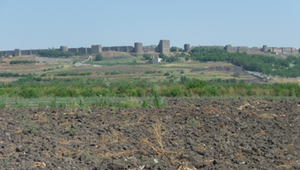
Hevsel Gardens in Diyarbakir
Archeology – Measure – Innovation – Development – Anatolia (AMIDA)
The ancient city of Amida (nowadays, Diyarbakir) and Hevsel Gardens have been classified as a World Heritage and Cultural Landscape by UNESCO since 2015. Local know-how and traditional practices need to be analyzed and shared in order to contribute to sustainable alternatives such as agro-ecology or short supply chain organization.
Objectives
Contribute to the protection of the tangible and intangible, natural and cultural heritage of Diyarbakir and Hevsel Gardens:
- Identify the cultural practices and analyse how knowledge is being shared and transferred in Hevsel Gardens.
- Explore the interactions between human activities and environment to better understand the types of practices (harvesting, irrigation, etc.) and the way to contribute to sustainable environment.
Activities
- Research work : surveys, data bases and interpretations
- Territorial diagnostics and analysis of practices and know-how through qualitative surveys
- Multidisciplinary studies about Hevsel Gardens, cultural landscape located in Diarbakyr on the banks of the Tigris river
Results and impacts
- Creation of a Geographic Information System (GIS) dedicated to the Walls of Diyarbakir, the Hevsel Gardens and the Tigris River
- Collection of oral and written literature
- Trainings and awareness-raising among students to highlight the singularities of cultural heritage
- Economic benefits for local tourism (creation of a GIS and support in managing the UNESCO process)
- Participation in research programs on the Tigris Valley (collaborating in projects coordinated by the universities of Batman, Diyarbakir and Izmir)
Main publications
Sabri KARADOĞAN, “Geographical landscape and evidence of civilization in the valley of the Tigris River and its tributaries Batman to Botan » in Workshop International « AMIDA 2016 LES JARDINS DE L’HEVSEL : le Tigre, l’eau et la ville, et quelques éléments pour la sauvegarde du site urbain (Prof. Dr., Dicle Üniversitesi Coğrafya Bölümü), Nov. 2016, Montpellier.
Martine ASSENAT, “La trame urbaine et son histoire “ » in Workshop International « AMIDA 2016 LES JARDINS DE L’HEVSEL : le Tigre, l’eau et la ville, et quelques éléments pour la sauvegarde du site urbain (MCF département d’Histoire et d’Archéologie, Montpellier 3 CRISES, IFEA), Nov. 2016, Montpellier..
Martine ASSENAT (dir.). L’Hevsel à Amida-Diyarbakır :études et réhabilitation de jardins mésopotamiens. Istanbul : Institut français d’études anatoliennes. (Patrimoines au présent, n. 6). (2015).
Coordinator
Université Paul-Valéry Montpellier 3– CRISES (Centre de Recherches Interdisciplinaire en Sciences Humaines et Sociales) – France
Mots-clés : Archéologie-Mesure-Innovation- Développement-Anatolie
More information
Source of funding: Maison des Sciences de l’Homme Sud (MSH Sud)
Contacts :
- Martine Assénat, Université Paul-Valéry Montpellier 3, France, Coordination du Projet, martineassenat@gmail.com
- Hélène Ilbert, CIHEAM-IAMM, UMR MOISA, France, Responsable analyses institutions, ilbert@iamm.fr
- Jean François Pérouse, IFEA, Turquie, Responsable coordination en Turquie, jeanfrancoisperouse@gmail.com
Partners :
- CIHEAM – Institut Agronomique Méditerranéen de Montpellier (CIHEAM-IAMM) – France
- Institut Français des Etudes Anatoliennes à Istanbul (IFEA) – Turquie
- Université Montpellier 3, LERSEM, (Laboratoire d’Études et de Recherches en Sociologie et en Ethnologie de Montpellier) – France
Metropolitan Agriculture for Developing an innovative, sustainable and Responsible Economy
According to the FAO, a paradigm shift in both urban and agriculture development as well as in the planning and the formulation of policies , is required in order to ensure access to urban food security, improve environmental management and enhance rural-urban linkages. Although recognized as a major lever of eco-innovation for metropolis’ sustainability and competitiveness, metropolitan and peri-urban agriculture (MPA) still suffers from a “mainstreaming gap”, remaining overlooked by policy makers, academic research and the general public. As a result, the environmental cost of food is an invisible but nonetheless major burden for cities. The MADRE project aims to meet this challenge: supply MPA with key players and create a transnational cooperation in the MED area. Aiming at fostering a change process in the metropolitan food supply model, the project will capitalize on the wide set of academic knowledge, pilot actions and policies, networks and transnational cooperation in order to allow MPA reaching a critical level in the MED area. In depth assessment of available material will provide the baseline for an empowerment of MPA stakeholders and then to a formal commitment to initiate a transnational clustering process. Such a capitalization process will involve a multidisciplinary, pluralistic and multilevel partnership from 5 different mediterranean countries (Spain, France, Italy, Greece and Albania), each partner representing a flagship metropolitan area.
Objectives
The overall objective of the project is to initiate the creation of a transnational cluster of metropolitan agriculture stakeholders to enhance their capacity of eco-innovation.
Activities
- Take stock of the good practices of the MPA in Europe and elsewhere;
- Create metropolitan working groups in the 6 metropolitan areas (Barcelona, Bologna, Marseille, Montpellier, Thessaloniki, Tirana) by bringing together public decision-makers, academia, producers (farmers, industry, retailers, logisticians) and civil society;
- Set up transnational working groups for the creation of a transnational cluster on the MPA based on the good practices in the 6 metropolitan areas;
- Help the transnational cluster to spin-off good practices and to raise awareness amid the metropolitan public authorities.
Results and impacts
- Empowerment of local, regional and national stakeholders of MPA networks;
- Dissemination in the MED area of the consolidated set of knowledge on MPA best practices;
- Optimisation of eco-innovation capacity of metropolitan agriculture network.
Coordinator
Agence des Villes et Territoires Méditerranéens Durables (AVITEM) – France
More information
Source of funding: Programme Interreg Med/ fonds UE FEDER
Contacts:
- Candice Le Tourneur (AVITEM) – Responsable projet – c.letourneur@avitem.fr
- Selma Tozanli (CIHEAM-IAMM) – selmatozanli@gmail.com
- Fatima El Hadad – Gauthier (CIHEAM-IAMM) – elhadad@iamm.fr
Total budget: 1 173 175 €
Partners:
- ANIMA Investment Network (ANIMA) – France
- CIHEAM – Institut Agronomique Méditerranéen de Montpellier (CIHEAM-IAMM) – France
- Mediterranean Cities Network (Med Cities) – Espagne
- Aristotes University of Thessaloniki (AUTH) – Grèce
- Metropolitan City of Bologna (CimetBo) – Italie
- Agricultural University of Tirana (UBT) – Albanie
Hilly Areas Sustainable Agricultural Development Project
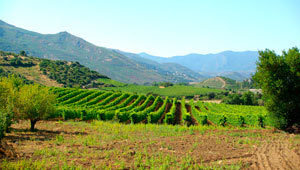
Provide technical assistance to small-scale farmers in two disadvantaged areas in Lebanon: Akkar and Baalbeck-Hermel through the creation and management of service centers by the regional cooperative unions.
Objectives
- Provide technical assistance to the cooperative unions of Al-Joumieh in Akkar and to the union of regional cooperatives of Baalbeck-Hermel to transform the services provided to farmers into operational and self-sustaining Farming Service Centres (FSC);
- Improve productivity and quality of local production to increase incomes and reinforce the links with the market;
- Ensure the sustainability of the project through the implementation of a viable economic model for the FSCs and access to new markets.
Activities
- Improve the infrastructure of the FSCs;
- Capacity building of the FSCs’ members and farmers;
- Develop agricultural extension and advisory activities for farmers;
- Improve marketing and market access.
Results and impact
- Increase production quality, create local brands and an Organic label
- Improve the farmer’s income in both target regions
- Enhance the technical and financial autonomy of the FSCs
Coordinator
CIHEAM-IAMM – France
More information
Source of funding: Fonds International de Développement Agricole (FIDA)
Contact: Tahani Abdelhakim (contact@iamm.fr)
Total budget: 1 499 058 €
Partners:
- Centre d’Expérimentation Horticole de Marsillargues (CEHM) – France
- Institut de l’Olivier (IO) – Tunisie


 CIHEAM MontpellierOur vision is that of a Mediterranean basin characterised by a spirit of cooperation.
 CIHEAM publicationsOur publications and communication tools aim to facilitate decision-making processes for political, economic and agricultural actors in the Mediterranean region
 News and events
 Press review (Scoop.it)
 Master programmesThe CIHEAM Montpellier stands for both personalised accompaniment and international openness.
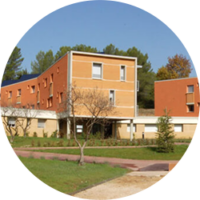 Campus & student lifeSince 1962, almost 95% of our foreign students have been granted accommodation on site.
 Doctoral platformShaping the scientists of tomorrow through research training… A natural commitment of the CIHEAM Montpellier
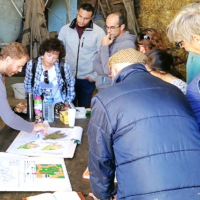 ProjectsOur research and cooperation projects are tools for inclusive development, they take into account the populations and rural and coastal territories of the Mediterranean.
 Mediterranean online catalogueA unique Documentation Center on the Mediterranean,
invested in sharing knowledge.
Mediterranean online catalogueA unique Documentation Center on the Mediterranean,
invested in sharing knowledge. Scientific productionThe scientific production of the CIHEAM Montpellier is the fruit of collaborations by our lecturer-researchers, associated experts, students and research partners.
 Becoming partnersCreating partnerships is part of the genetic make-up of the CIHEAM Montpellier... Join one of its projects or study programmes, support its actions.
 Ministerial meetingsThrough the Ministerial, CIHEAM contributes to the construction of a dialogue between the Mediterranean countries around questions relating to agriculture and the rural world.