SHERPA

Sustainable Hub to Engage into Rural Policies with Actors
Sherpa

SHERPA aims to gather knowledge that contributes to the formulation of recommendations for future policies relevant to EU rural areas, by creating a science-society-policy interface which provides a hub for knowledge and policy.

SHERPA will contribute to policy development in three main areas:

Provision of inputs for the design of future research policies, with a focus on the preparation of work programmes under Horizon Europe.
Support for implementation of policies relevant to rural areas in the programming period 2021-2027; and
Supporting for setting the direction of rural policy in the next programming period.
To achieve this, the project will:

  • Map the main drivers of future trends and dynamics of EU rural areas;
  • Establish 40 Multi-Actor Platforms (MAPs) across the EU as effective and sustainable Science-Society-Policy interfaces;
  • Create a shared knowledge base relevant to EU rural policy by taking stock of results of past and ongoing research projects;
  • Engage in a dialogue between citizens, researchers and policy-makers across EU territories;
  • Formulate recommendations linked to different scenarios for the development of modern rural policies at European, national and regional levels, as well as for the future rural research agenda.

>> Website

More information

Source of funding

  • European Union: Horizon 2020

Programme and contact references

  • Project Coordinator: Olivier Chartier and Elodie Salle (ECORYS), Belgique, sherpa@ecorys.com
  • Project Manager at CIHEAM Montpellier: Samuel Féret, feret@iamm.fr

Partners

  • CIHEAM Montpellier
  • ECORYS
  • WAGENINGEN UNIVERSITY & RESEARCH
  • AGRICULTURAL UNIVERSITY OF ATHENS
  • AEIDL
  • NORDREGIO
  • UNIVERSITA DE PISE
  • UNIVERSIDAD POLITECNICA DE MADRID
  • THE JAMES HUTTON INSTITUTE
  • JOHANN HEINRICH VON THEUENEN INSTITUT
  • INSTITUTE FOR EUROPEAN ENVIRONMENTAL POLICY AISBL
  • UNIVERZA V LJUBLJANI
  • EUROPEAN RURAL DEVELOPMENT NETWORK
  • ALMA MATER STURIORUM-UNI BOLOGNE
  • UNIVERSIDAD DE SANTIAGO DE COMPOSTELA
  • CONSULAI, CONSULTORIA AGRO INDUSTRIATRIAL LDA
  • ASSOCIATION DES AGENCES DE LA DEMOCRATIE LOCALE
RUR’UP

Innovative education for sustainable development in peripheral rural areas

RUR’UP is an international cooperation project between Higher Education Institutions (HEI), intergovernmental organisations and rural development stakeholders, funded by the EU Programme Erasmus+. The project aims to support Higher Education institutions in equipping their graduates with skills and competencies relevant for specific labour market and societal needs of peripheral rural regions in the EU (HNV areas). The project will develop new e-learning blended modules through an educational transdisciplinary approach and by using innovative pedagogies such as student-centred and project problem -based learning, and therefore, will support the development of the HEI curricula based on learning-outcomes. Specifically, the project will also develop and test a unique modular course design (including online, intensive learning modules and case studies and on-field work.
RUR’UP is built up on HNV-Link H2020 project: 

>> Website

Objectives

Peripheral rural areas play an essential role in our territories and contribute to the sustainable development of agro-pastoralism, to the preservation of the environment, and are essential for biodiversity, rural heritage and traditional practices, while improving the socio-economic conditions of rural communities. However, there is still a gap between professional needs and student’s practices and skills. Teachers and academia should bridge this gap and enlarge teaching and learning scope while raise awareness among future professionals on peripheral rural specificities.

Activities

Main activities of RUR’UP are the following:

  1. The assessment of the education needs and gaps for the sustainable development of the EU peripheral rural areas
  2. Elaboration of a blended e-learning course
  3. Elaboration of a Bank of Case Studies – including ready-to-use training capsules
  4. Development of a Digital Teaching Platform and Digital Learning Resource
  5. Organisation of an training on-field Intensive Study Activity

Results et Impacts

Main expected outputs and impacts are to:

  1. Build understanding on the specific needs by the labor market in peripheral rural regions (high nature value areas – HNV areas)
  2. Support curricula development to ensure learning for the skills and competencies
  3. Strengthen collaboration between HE and potential regional and cross-regional employers
  4. Support professional competencies of the HE educators in such regions, and
  5. Contribute to the international pool of open educational resources (OER).

The project will enhance skills and professional competencies of at least one hundred (100) participating students and fifty (50) academic staff and researchers.
Therefore, RUR’UP will have a positive impact on field approaches concerning sustainable development of peripheral areas.

>> More information

Coordinator

University of Thessaly (UTH) – Grèce

More details

Source of funding: Hellenic National Agency – Erasmus+ Programme (IKY – Greece)
Programme and contacts: Maite Puig de Morales, CIHEAM Montpellier (puigdemorales@iamm.fr)
Partners:


  • University of Helsinki (UH) – Finlande
  • University of National and World Economy (UNWE) – Bulgarie
  • University of Agricultural Sciences and Veterinary Medicine of Cluj Napoca (USAMV-Cluj) – Roumanie
  • Galway-Mayo Institut of Technology (GMIT) – Irlande
  • University of Osijek, Croatia (Josip Juraj Strossmayer University of Osijek (UNIOS) – Croatie
  • CIHEAM Montpellier (CIHEAM-IAMM) – France

IPAUP

Educational innovation for the development of urban and peri-urban agriculture

The IPAUP project is co-financed by the Ministry for Europe and Foreign Affairs and within the framework of the Solidarity Fund for Innovative Projects or “Seed Fund to support projects to support the development of higher education French in West and Central Africa (ADESFA II) ”. It is coordinated by the International Center for Pedagogical Studies (CIEP), now FEI.

Trainers and teachers in higher or professional Moroccan agricultural education (initial or lifelong education), are the main target of the project.

The project benefits from the experience of the multidisciplinary group of French project partners, at CIHEAM-IAMM in Montpellier, and in the following structures affiliated to Agreenium: INPT-ENSAT in Toulouse, Institut Agro Montpellier, INRAE, and CIRAD in Montpellier.

The IPAUP project is an action-training based on project-based pedagogy. It aims to design and produce digital educational ressources on the theme of AUP, thanks to close collaboration between the Moroccan and French teams, both in terms of didactic content and educational engineering.

Goals

  • The Moroccan team will strengthen its skills in innovative pedagogies for hybrid dissemination (face-to-face / distance). She will create the scenarios and resources for the course while taking charge of new distance training tools and innovative teaching methods; she will independently supervise a test session of the product chapters.

  • A Moodle platform will be created at ENAM to distribute this course as well as the School’s other online training courses.

  • A 40-hour hybrid course will be carried out for a professional audience, with 15% face-to-face (2 face-to-face meetings) and 85% at a distance.

  • A course intended for engineering students will be declined, with additional activities, in particular conceptual.

In the medium term, this project should enable ENAM to pursue the following objectives:

  • Create a resource center for educational innovation at ENAM for the teaching and learning of AUP;
  • Approach the next 2023/2024 accreditation campaign with a revised agricultural engineer training, prepared for greater internationalization;
  • Restore gender balances in the recruitment and employability of learners in the AUP sector, especially women;
  • Develop a mechanism for dialogue with the social, socio-economic and public policy sectors, for greater employability of learners;
  • Provide a renovated quality assurance framework to evaluate the training produced by the new resource center for educational innovation.

More information

Source of funding

ADESFA II

Programme and contact references

Pierre Grenier – AGREENIUM

Partners

  • ENAM – Morocco
  • RIAM – Morocco
  • ONCA – Morocco
  • DEFR – Morocco
  • CAR Fès/Meknes – Morocco
  • INRAE – France
  • CIRAD – France
  • CIHEAM Montpellier – France
  • Institut Agro Montpellier – France
  • INPT-ENSAT – France

SMART AL

Master in European Innovations for a Sustainable Management of Albanian Territories, rural areas and agriculture: Instruments, policies, strategies

The SmartAL Project –Sustainable management of Albanian Territories, rural areas and agriculture: Instrument, policies, strategies– was selected by the European Commission in August 2017.
It is undertaken under the framework of the Erasmus+ programme “Cooperation for Innovation and the exchange of good practices – Capacity building in the field of Higher Education”, which purpose is to modernize higher education systems. SmartAL aims at promoting sustainable development of rural territories in Albania –the partner Western Balkan country– and contributing more broadly to its process of integration into the European Union.

>> Site web

Objectives

SmartAL’s main objective is to strengthen the capacities of three Albanian universities by creating a Master 2 which complies with the European specifications. Focusing on the sustainable development of Albanian rural and agricultural areas, by the use of instruments, policies and strategies, the final objective is to complete the accreditation process of this Master, in line with the Albanian legal framework and the European standards (Bologna Process).

Teaching Content

The Master will be composed of 9 modules: a common basis of 5 modules led by the Agricultural University of Tirana (UBT), completed by 4 specialization modules with 2 alternative options, respectively supported by the European University of Tirana (UET) and the University Fan S. Noli Korçë (UNKO). Such inter-university cooperation has the benefit of a strong territorial anchorage ensuring the coherence between the teaching content and territorial needs.

The pedagogical content, intended for Albanian junior executives and decision makers, will enable them to develop the necessary skills to participate to the European negotiation dialogue, but also to implement public policies in a national context of structural reforms with regard to decentralization.

Methodology

After a first survey conducted among institutional partners, professional organizations and private partners, which lead to the identification of employment needs (Job Market Review), the training contents to be developed and the European universities likely to provide them will be identified.

Albanian teachers will then beneficiate from a training and coaching by European universities in a view to co-build the pedagogical content of the future Master.

The European universities (teachers and students), and the partners implied in the consortium as a whole, will be mobilized for training seminars (in and ex-situ), field studies, PhD internships and public feedback conferences. The development of the project, as well as the designing of teaching modules, will be committed to a quality approach in order to ensure a continuous improvement process.

Coordinator

CIHEAM-IAM Montpellier – France

En savoir plus

Source of funding : Erasmus+ Capacity Building in the field of Higher Education (co-funding)

Contact : Magali Maire, CIHEAM-IAMM (maire@iamm.fr)

Total budget : 758 308 €

Partners :

  • Fan S. Noli University Korce (UNKO) – Albania
  • Universiteti Europian i Tiranës (U.E.T. SHPK) – Albania
  • Universiteti Bujqesor i Tiranës (UBT) – Albania
  • Panteio Panepistimio Koinonikon Kaipolitikon Epistimon (UPSPS) – Greece
  • Universitaet Hohenheim (UHOH) – Germany
  • Université Paul Valéry de Montpellier (UPV) – France
  • (Associated partner) Ministry of Education and Sports – Albania
  • (Associated partner) Albanian Network for Rural Development – Albania
  • (Associated partner) Ministry of Agriculture and rural development – Albania
  • (Associated partner) Ministry of urban development – Albania
  • (Associated partner) Korçe regional Council – Albania

FEBSMed

Favorisons l’Économie Bleue Solidaire en Méditerranée

Favoriser une sortie de la crise socio-économique générée par la Covid-19 par la voie de la promotion de l’Économie Bleue Solidaire (EBS) comme secteur résilient et durable général.
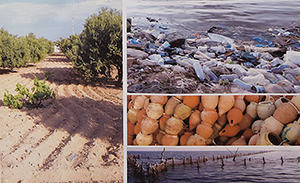
Objectif général:
Coordonner une action d’identification des acteurs de l’EBS dans l’Eurorégion Pyrénées-Méditerranée

Objectifs spécifiques:

  • Identification et mapping des acteurs actifs dans l’EBS
  • Création de synergies et de connexion entre les acteurs
  • Organisation d’événements de réseautage et collaboration
  • Elaboration d’une stratégie d’actions d’appui à l’EBS au profit de l’Eurorégion Pyrénées-Méditerranée

En savoir plus

Source de financement

Eurorégion Pyrénées-Méditerranée

Programme et contacts

  • Coordinateur: Innovació i Economia Social en la Mediterrània, SCEL,  IesMed
  • Responsable du projet au CIHEAM Montpellier: Zied Ahmed, ahmed@iamm.fr

Partenaires

  • IES MED, Innovació i Economia Social en la Mediterrània
  • Centre International de Hautes Etudes Agronomiques Méditerranéennes – Institut Agronomique Méditerranéen de Montpellier (CIHEAM Montpellier)
  • Asamblea de Cooperación por la Paz Islas Baleares, ACPP

DEVLOK

Implementation of a participative and inclusive approach to support the maritime, agricultural and rural economy of the Kerkennah islands based on a sustainable mobilisation of the local resources

Elaboration of a local governance process in the Kerkennah Islands that ensures the inclusive dialogue between the involved stakeholders and their participation in the definition, implementation and monitoring of a sustainable territorial development strategy which takes into account the current issues of the territory.

>> Facebook page

Objective

Reinforce the maritime, agricultural and rural economy of the Kerkennah Islands by supporting economic and social initiatives that enhance the local and specific resources of the Kerkennah Islands for the benefits of the overall population.

Target Groups

  • Governance: local institutions, local consultative structures, development associations, professional organizations that will participate in the governance of the territory
  • Economic and social initiatives: professionals and professional organizations, local development organizations, projects leaders, business support structuresui aux entreprises

Activities

To reach its objectives, the project is implemented in five steps including capacity building, training, support to public and private initiatives, monitoring and evaluation:

  • Step 1 – Elaboration of the management processes (methodology and planning of actions)
  • Step 2 – Creation of dialogue forums and reinforcement of the participative processes (elaboration of the local governance process)
  • Step 3 – Joint elaboration and validation of the territorial development process (ensure that the process is in line with the already existing, public or private, territorial development interventions)
  • Step 4 – Identification, selection and support in the implementation of the social and economic initiatives carried out by the private or public stakeholders (implementation and monitoring of the territorial strategy)
  • Step 5 – Capitalization and valorisation of the project achievements

Results 

  • A Local Development Committee (LDC), an operational forum for dialogue and for a collective management of the project
  • 500 people from the Kerkennah Islands have an increased awareness of the development challenges of the territory and regularly participate in the dialogues and coordination meetings
  • 100 local stakeholders (public, private, development organizations, civil society) have reinforced their capacities in the fields of inclusive and participative processes, territorial and local planning, economic development
  • A territorial project, which integrates both the needs of the local population and the national strategic orientations, is elaborated and officially approved
  • 40 economic and social projects, in line with the territorial project, are supported in their long-term establishment
  • The partnership with the European development organizations is dynamic and adapted to the needs of the territory
  • The national and European public institutions promote the achievements of the project in their policies.

More information

Contacts :

  • Jean-Paul PELLISSIER – CIHEAM-IAMM – pellissier@iamm.fr
  • Zied AHMED – CIHEAM-IAMM – ahmed@iamm.fr